 USA
USA CANADA
 EUROPE
Natural Dyeing Wool Roving: Step-by-Step Tutorial
I don’t know about you, but for me, January has felt about three years long. One of the ways I’ve been coping with the darkness and cold has been poking wool with a tiny needle over and over again to make sweet creatures that remind me that Spring will in fact arrive one day.

I’m lucky to live in a part of Toronto where there is an abundance of bird life and the Robins, Cardinals, and Dark-Eyed Juncos that have been visiting the bare branches outside my window this month have left me inspired. I only want to draw birds. Using some of these drawings as inspiration, I set to making a feathered friend from naturally dyed wool.
One of the barriers for me with creating natural dyes was always having access to enough dye material for large pieces of cloth. If you’re following the basic formula that your dye material should be the same weight as the cloth you’re dyeing, this can mean needing hefty amounts of raw matter. If you are adhering to ethical foraging practices*, which I always do, the labor of collecting these things can be daunting if not impossible.
*Robin Wall Kimmerer’s Honorable Harvest foraging principles: ask permission; never take the first/last; take only what you need; use everything taken; minimize harm; reciprocity (give back); and share.


So this past Summer and Fall, I’ve been focusing my color-making efforts on small batch dyes and inks made from materials that are readily accessible to me, foraged from the outside world and inside my kitchen. I only need a little bit of Sumac gifted from a friend’s garden, or a handful of onion skins (which would have been kitchen waste) to create some beautiful color.
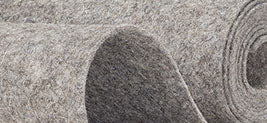
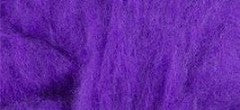
And this little bit of color is the perfect amount to change a tuft of roving into a delicately hued bundle ready for needle felting. For my experiments with this, I used the F-10 Carded Felting Wool (70% wool, 30% rayon/viscose) in white.
For the Sumac, I did solar-dyeing, placing the material in a large jar covered in water and left on a sunny windowsill for a few days. I then strained and transferred the liquid to an aluminum pot and gently simmered to concentrate the color. Once it was at the desired strength, I placed my wet tufts of roving into the warm liquid and let it sit overnight. I didn’t mordant (pretreat the wool with alum) the roving as I wasn’t planning to use it for something that would need to be washed and I just frankly couldn’t be bothered.
The onion skins needed to be gently boiled to extract the color, which I did in my same trusty aluminum pot and then followed the same process to add the wool (you can see the results below).


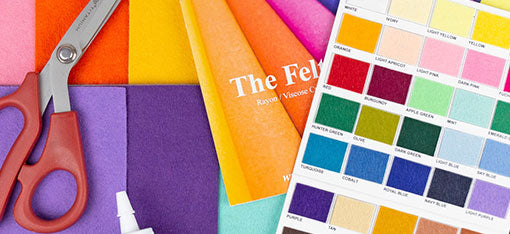
This brings us to the present, where it's time to take up this beautiful material and craft something special in the depths of Winter. I got out my set of felting needles from The Knit Cafe (a local yarn shop here in Toronto) and a piece of a Premium Wool Blend Craft Felt in Burgundy and got to poking. This felt works really well as a substrate for needle-felting - I did try this process on the heavier 100% wool designer felts and they were just too dense to poke into properly.
If you’ve never needle felted before, the process isn’t complicated and has always felt similar for me to drawing, just using different tools. You slowly build up your shape and color by adding bits of the roving until you have an image you like. Adding a little embroidered edge using a black thread and couching stitch adds a more illustrative element that I like.


I used a screw punch to add some holes around the edge of the felt that I could crochet into with a soft black yarn to create a simple border and finish the piece. It’s so light that I was able to just tape it up next to the window where I bird watch.


If you’re interested in this process, I’ll be teaching Drawing with Felt and Thread on March 7th and 8th, 2026 at ARTiculations Art Supply in the Junction neighborhood of Toronto. You can see the details here
We’d love to see your projects! Share your masterpieces on social media and tag us @erinmackeen and @the_felt_store so we can admire your incredible work!
Happy Crafting!
Hello there,
Thanks for putting this tutorial together. I never thought of using a screw punch for making holes, or felting to flat felt. Good lesson.
Bunny
Leave a comment